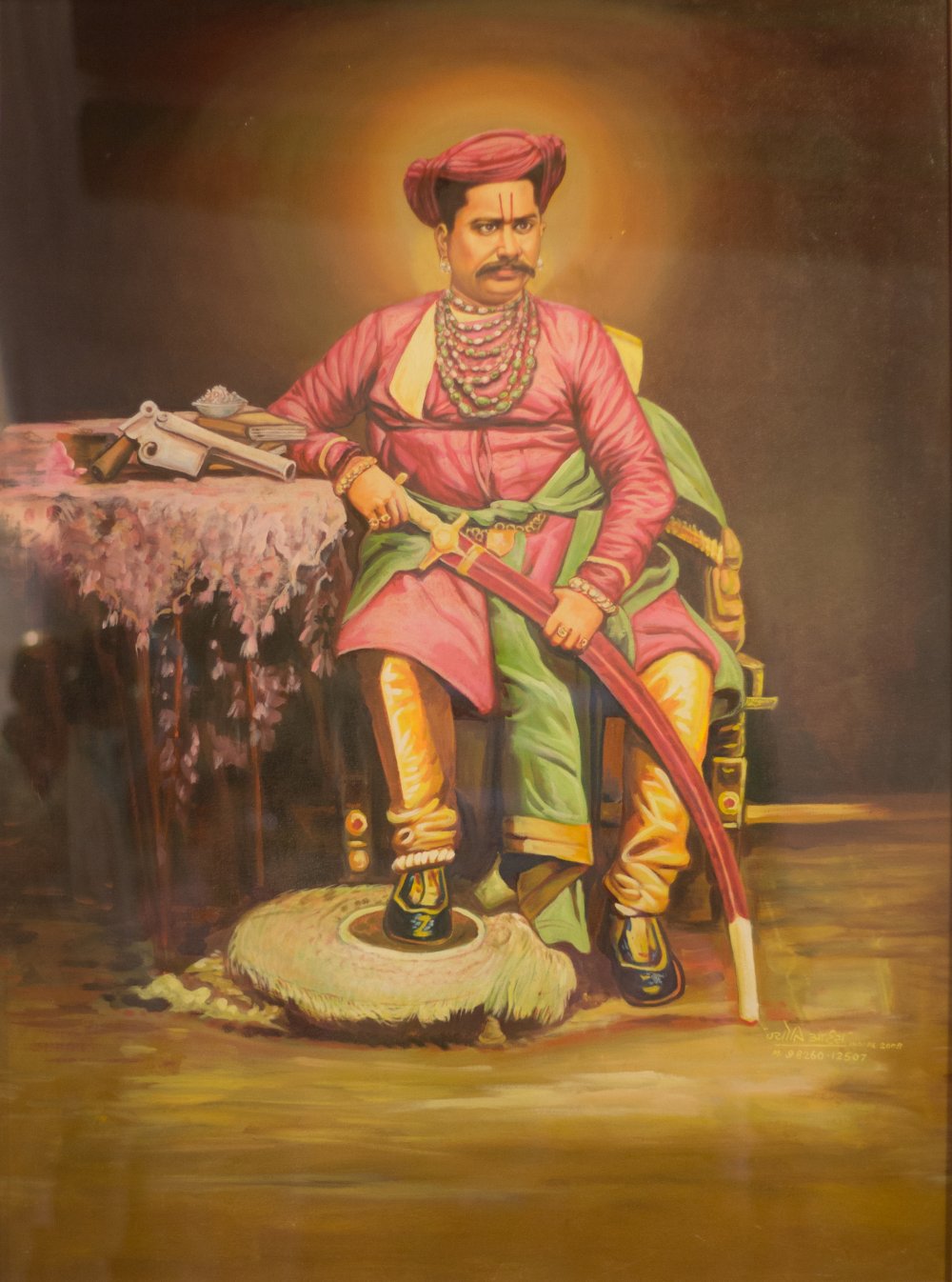
Rao Raja Rao Chatrakaran ji Mandloi 'Bahadur' 'Zamindar'

Born on 22 March 1871, Rao Chhatrakaran was a posthumous heir to the Mandloi lineage, raised entirely under the capable stewardship of his mother, Rajmata Gajra Devi. From childhood, he displayed formidable strength and discipline, training in riding and shooting and regularly lifting a heavy red garnal stone as part of his exercise routine. A private akhādā was built behind the Rawala for his athletic practice.
He was educated at Daly College, Indore, under the guidance of its principal, R.H. Gunion. As he matured, he joined his mother in administrating their vast estate with notable tact and integrity. A passionate agriculturist and planter, he personally oversaw the care of the Navlakha Bagh, once home to approximately nine lakh mango trees, as well as three sacred chikoo trees planted in front of the Rawala court, which were renowned for bearing fruit year-round—thanks, according to family lore, to the blessings of a visiting saint.
Holding a unique position of respect within both the Holkar state and the British-administered Central India Agency, Rao Chhatrakaran attended all major royal events. He married three times; his first barāṭ procession famously stretched from Rawala’s gate to the village of Katariya. Only his third marriage bore an heir, though tragically, his final Rani passed away shortly after childbirth.
Even as motor cars became fashionable among other princely families, Rao Chhatrakaran remained devoted to his heritage—travelling in his traditional Shikari Gadi pulled by bullocks to visit his fields. He also maintained the Rawalas’ hathi-khāna, quietly lending an elephant to the Holkar Maharaj for Dussehra puja. Beyond palatial confines, he was spiritually connected,often taking dips in the Khan River near Kankeshwar Mahadev temple for his daily ritual.